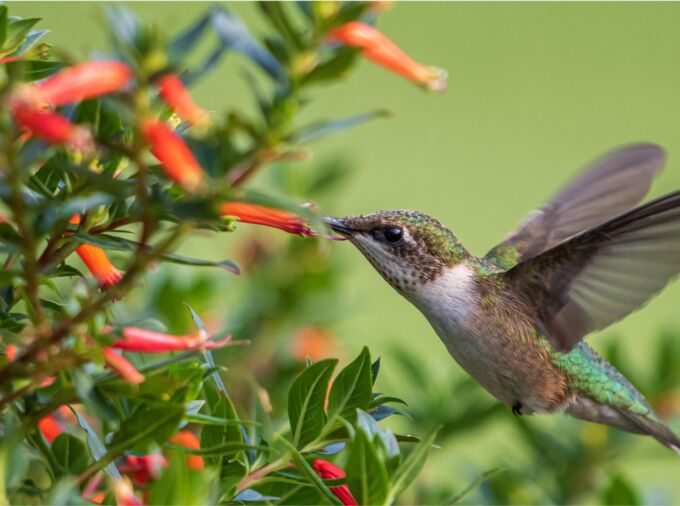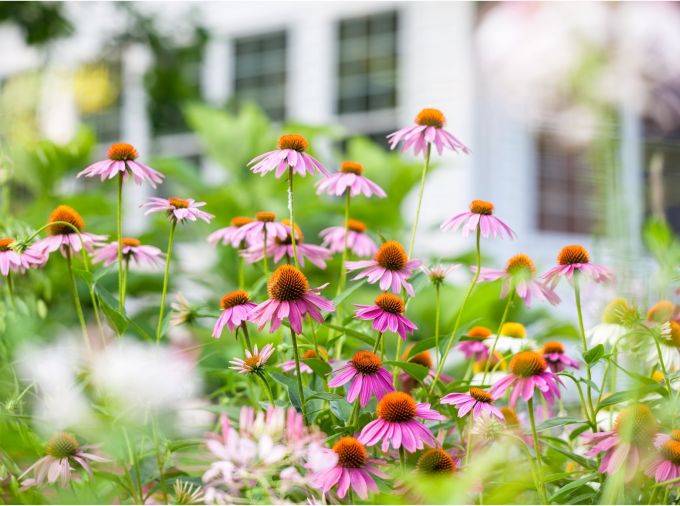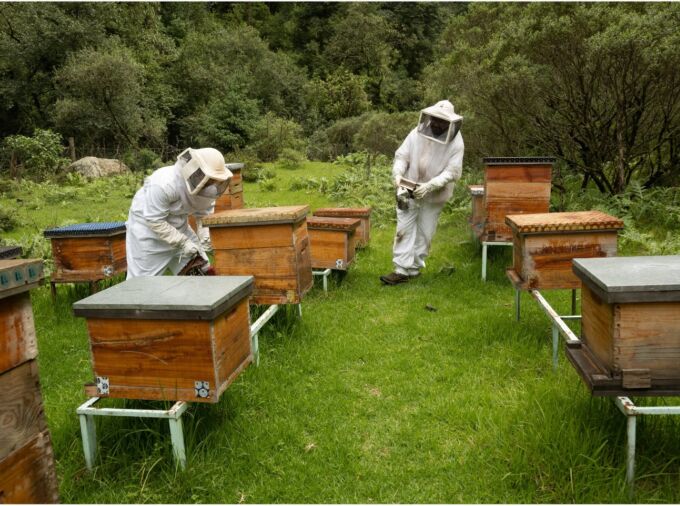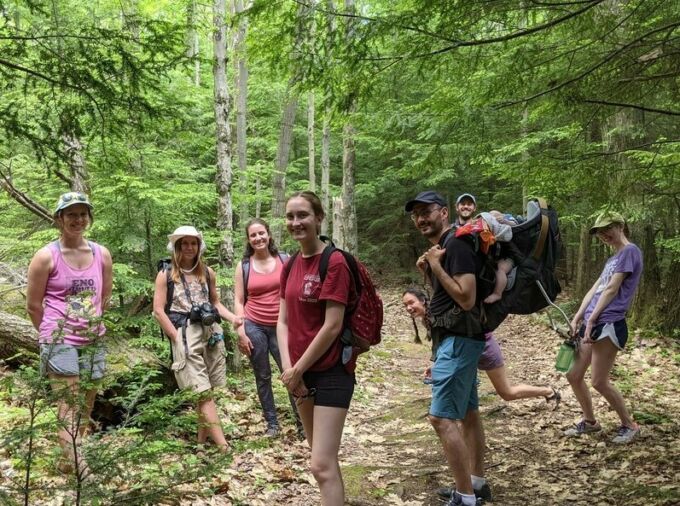
Members of the Center for Pollinator Research
Mary Barbercheck, Professor, Entomology
Dr. Barbercheck’s research focuses on sustainable agriculture. Her studies include biological soil quality and sustainability and the biology and ecology of entomopathogenic nematodes and fungi.
meb34@psu.edu
Robert Berghage, Associate Professor, Horticulture
Dr. Berghage performs both research and extension at PSU on flower gardners and green roofs. He interacts directly with the Master Gardner program and with the public. He is interested in developing pollinator-friendly plantings for enhancement of pollinator populations.
rdb4@psu.edu
Dave Biddinger, Research Associate, Entomology
Dr. Biddinger is working on the conservation of wild populations of Osmia Orchard Bees as supplements to honey bees for orchard pollination and is developing managed populations with Jim and Maryann Frazier. He has been examining the effects of orchard pesticides on non-Apis pollen bees and developing their use as bioindicators of ecological health in ecologically based IPM programs in apple using only reduced-risk and bio-pesticides for 3 seasons. He is collaborating with the Pennsylvania Department of Agriculture in their survey efforts to develop the first checklist of Pennsylvania bees and in understanding the natural history and importance of the many species of bees found in fruit orchards. He is a trained taxonomist as well as biological control specialist.
djb134@psu.edu
Anita Collins, USDA, ARS (retired), Adjunct Professor, Entomology
Dr. Anita Collins continues her research on cryopreservation of honey bee semen as a collaborator with USDA, ARS, Bee Research Lab, Beltsville, MD. However, since retirement, the intensity of the work is rather reduced. As a member of the native bee survey group coordinated by Sam Droege, USGS, she is trapping and identifying native species in the Pocono Mountain and Lehigh Gap areas of northeastern PA, as well as in Berks County, PA. Recently she was appointed an Adjunct Professor, Dept. of Entomology, The Pennsylvania State University.
frozenbeedoc@verizon.net
Diana Cox-Foster, Professor, Entomology
Dr. Cox-Foster’s focus is on understanding the mechanisms underlying host/pathogen interactions in honey bees and other pollinators. Her research utilizes a systems biology approach, examining the interactions at multiple levels including the molecular processes in the pollinator, the genomics of the pathogens, impacts on cellular physiology and immunity, and overall impacts on ecological interactions. Her work focuses primarily on honey bees and with extensions of the findings into other pollinator species. Her expertise includes the viral pathogens that infect bees and other pollinators and the impacts of varroa mites. She is also collaborating in projects to transition her research into application to remediate problems in honey bees and other pollinators, with emphasis on controlling viral disease via the mites and development of disease resistant bee strains. She has led the efforts to look for new pathogens in bees suffering from CCD and was selected as co-chair of the Colony Collapse Working Group.
dxc12@psu.edu
Andrew Deans, Associate Professor, Entomology, Director of the Frost Entomological Museum
The
Deans lab studies the systematics of parasitic Hymenoptera,
specifically wasps classified in Ceraphronoidea and Evanioidea. Several
ongoing projects also focus on biodiversity informatics, especially
ontologies and semantic approaches to representing phenotype data, and
on methods of specimen digitization.
adeans@psu.edu
Shelby Fleischer, Professor, Entomology
Dr.
Fleischer is an applied insect ecologist. His research helps define
the structure and dynamics of insect populations and communities in
agroecosystems, and he uses this information to advance IPM. Projects
often emphasize communities of beneficials: examples include
conservation biocontrol in peppers, sweet corn, and cucurbits, and how
farming systems and landscapes influenced community dynamics of a
diverse (>100 species) assemblege of epigeal species critical for
biocontrol and nutrient cycling. He is applying those community ecology
techniques across landscapes to advance conservation of pollinator
communities in vegetable agroecosystems that rely on insect pollination
of cucurbit crops.
sjf4@psu.edu
James Frazier, Professor, Entomology
We are focusing on synergistic and sublethal effects of multiple pesticides on the chemical senses and chemically mediated behaviors of honeybees in relation to honeybee health and CCD in collaboration with Chris Mullin and Maryann Frazier. Graduate student Daniel Schmehl is also looking at a comparative approach with the solitary bee, Osmia cornifrons.
jfrazier@psu.edu
Maryann Frazier, Senior Extension Associate, Entomology
As the senior extension associate specializing in apiculture, Maryann is responsible for honey bee extension throughout the state and cooperatively across the Mid-Atlantic region. She teaches courses in beekeeping, general entomology and teacher education and is involved in the department’s innovative public outreach program. She is working closely with Dr. Chris Mullin and Dr. Jim Frazier on the potential role of pesticides on declining honey bee health in general and CCD specifically.
mxt15@psu.edu
Rick Grazzini, Garden Genetics LLC, Adjunct Professor, Entomology
Dr. Grazzini is studying the pollinator attractiveness of commercial and heirloom varieties of Pentas lanceolata. He is a plant breeder working with a wide range of ornamental and edible plant species on the research farm and greenhouses of GardenGenetics LLC.
rick@gardengenetics.com
Christina Grozinger, Associate Professor, Entomology
Dr. Grozinger’s research group uses genomic approaches to study the biology of honey bees, their pests and pathogens and other social insect species. Ongoing projects include characterizing the genes and molecular mechanisms involved in pheromone communication, reproduction, and response to immunostimulation in honey bees. We are developing genomic resources for Varroa mites, a serious pest of honey bees, fire ants, and the paper wasp Polistes dominulus, both excellent models for study the evolution of social behavior.
cmgrozinger@psu.edu
Heather Hines, Assistant Professor, Biology and Entomology
Dr. Hines’ research spans the fields of systematics, evolution and development, and evolutionary and ecological genomics. Her research program currently focuses on the genetics underlying mimetic color pattern variation in both butterflies and bumble bees. Dr. Hines’ research also involves projects in Hymenoptera phylogenomics, bumble bee systematics and biogeography, Heliconius butterfly phylogeography, insect social evolution, and pollinator conservation.
hmh19@psu.edu
James Marden, Professor, Biology
Jim Marden’s research focuses on molecular and physiological ecology, including studies of molecular mechanisms that regulate individual phenotypes and population dynamics of pollinators such as moths and butterflies.
jhm10@psu.edu
David Mortensen, Professor, Crop and Soil Science
Dr. Mortensen performs both teaching and research at PSU. He is interested in how flowering weeds and crops in fencerows and field borders can be used to enhance pollination by honey bees and native bees in agricultural crops.
dmortensen@psu.edu
Chris Mullin, Professor, Entomology
Dr. Mullin studies pesticide toxicology as it relates to honey bee and pollinator health. He looks for evidence that pesticides and other toxic substances in bees, pollen and hive products may be linked to CCD. He develops and evaluates analytical methodology that monitors pesticides and their metabolites. His focus is on mechanistic interactions of modern systemic and seed-treatment pesticides used in transgenic technologies, and their risks to food security and non-target species. Practical outcomes include developing both selective pest control strategies and regulatory processes that assure safety for pollinators and products from the hive.
camullin@psu.edu
Nancy Ostiguy, Associate Professor, Entomology
Dr. Ostiguy’s lab is investigating the contribution of various stresses, such as varroa mites and miticides (used to control varroa mites), on Colony Collapse Disorder and other honey bee diseases. The impact of viruses and miticides on the survivorship of eggs, larvae, pupae and the longevity of newly emerged bees are being explored. The epidemiology (spatial and temporal distribution) of viral diseases and general colony health and survivorship are being investigated with researchers from six other universities in the United States. Models to predict varroa mite populations (and potential virus infection) as influenced by size of apiary and ambient conditions are being constructed and tested. Work is underway to evaluate varroa control tactics that do not expose bees to miticides yet reduce mite populations.
nxo3@psu.edu
Harland Patch, Research Associate, Entomology
Dr. Patch’s research focuses on the genetics and genomics of olfaction in insects and other arthropods. Honey bee olfaction plays a central role in social integration, defense of the colony and in nectar and pollen finding. He is currently involved in a project to understand the evolution of the honey bee olfactory system and how selection has influenced changes in chemoreceptors and other proteins. Other projects include developing genomic resources for Varroa mites and, in collaboration with other members of the CPR group, understanding Varroa resistance in subspecies of Apis mellifera in East Africa.
hmpatch@psu.edu
Ed Rajotte, Professor, Entomology
Dr. Rajotte is interested in crop pollination services provided by Apis and non-Apis bees, especially as part of an integrated pest management (IPM) program, especially as pollination in integrated into ecosystem services programs and practices. He is part of team studying the epidemiology of bee viruses. He has also studied pollination of fruit crops and wild bee biology.
egrajotte@psu.edu
Tim Reluga, Assistant professor, Mathematics and Biology
Dr. Reluga is an applied mathematician interested in the structure and functioning of biological systems, ranging across many different scales. One of his current interests is in the identification of feedback loops important in the regulation and disregulation of bee hives.
Katriona Shea, Associate Professor, Biology
Dr. Shea’s research focuses on modeling population movement, decision-making and foraging strategies. She is interested in applying these approaches to understanding the population distributions of pollinators and their ecological impacts.
k-shea@psu.edu
Chloe Silverman, Assistant Professor STS
Dr. Silverman trained in the history and sociology of science. She has published widely on the role of affect and parental knowledge in research on autism spectrum disorders, and is particularly interested in the relationships among caregiving, lay expertise, and bioethics. She is now studying the social communities involved in defining and addressing another complex, multifactorial phenomenon, Colony Collapse Disorder, as well as pollinator decline more generally. In addition to conducting fieldwork with members of the Center for Pollinator Health, she hopes to collaborate with them in developing strategies for public outreach and educational programs.
cbs14@psu.edu
Andrew Stephenson, Professor, Biology
Dr. Stephenson’s research focuses on the ecology and evolution of plant reproduction. Current projects include studies of the effects of growing conditions (soil nutrients, mycorrhizal infection levels, and herbivory) on the number, size, chemical composition, and performance of pollen, the effects of inbreeding on pollen performance, and in vivo pollen selection for tolerance to high temperatures. Our experimental approaches to these problems range from greenhouse and garden studies employing quantitative genetic designs through the use of morphological, biochemical, and molecular genetic markers to the deployment of a variety of physiological, developmental, and molecular techniques.
as4@psu.edu
Kenneth Tamminga, Professor, Landscape Architecture
Professor Tamminga’s research focuses on ecological design and restoration, planning for resilient and robust social-ecological systems, and anticipatory approaches to climate change impacts on landscape / ecosystems integrity.
krt1@psu.edu
John Tooker, Assistant Professor, Entomology
Dr. Tooker is interested in how non-crop habitat can be used to harbor populations of natural enemies in agricultural landscapes. Flowering plant species are an integral part of non-crop habitat because they can provide natural enemies with pollen and nectar, increasing life expectancy, fecundity, and, in many cases, the effectiveness of natural enemies. Most natural enemy species appear to visit only a narrow range of flowering plant species, so understanding this host range may enhance conservation biological control programs.
tooker@psu.edu
James H. Tumlinson, Professor, Entomology
Dr. Tumlinson and his students are investigating the chemical ecology and behavior of the small hive beetle, a recently introduced pest of bees. The small hive beetle is attracted to volatile organic compounds, including the honey bee alarm pheromone. Several of these attractive compounds, including the alarm pheromone, are produced by a yeast, which is associated with the beetle and thrives on pollen in the hives.
jht2@psu.edu
Heather Toomey Zimmerman
Dr. Zimmerman and her research group use ethnographic and design-based research methods to study youth and families within out-of-school contexts and across multiple settings. Zimmerman partners with schools, nature centers, and museums to understand the development of interests, knowledge, and expertise related to science. With colleague Dr. Susan Land, the team is exploring the role of mobile learning devices in supporting families’ and school children’s understandings of ecological systems, including pollinator-plant interactions.
heather@psu.edu